Everybody wants to fix the College Football Playoff, but nobody seems to know how. There’s a good reason for this. It’s because the College Football Playoff isn’t broken … college football is.
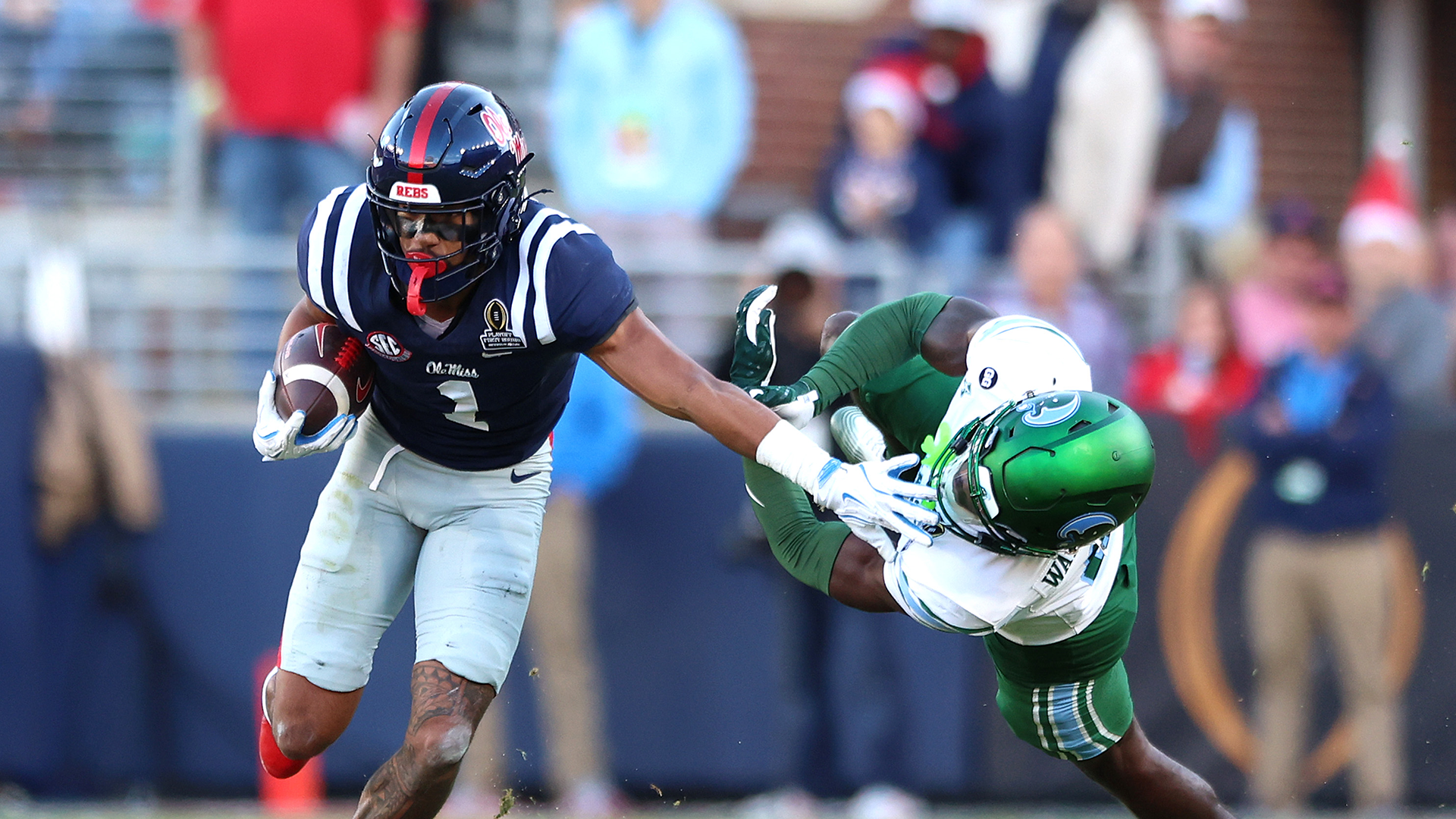
On Saturday, college football die-hards and casuals alike tuned in to watch two games that were largely decided before a snap ever took place. Sure, the possibility of an upset always looms, but the first quarters of Ole Miss’ 41-10 win over Tulane or Oregon’s 51-34 win over James Madison made it clear quickly how those games would go. They were results that would do nothing to slow the ceaseless wave of the college football literati who had spent the last few weeks gnashing their teeth in despair over the possibility these blowouts would happen and what it would all mean.
But the pearl-clutching, hemming and hawing are all directed at the wrong target. What we’re seeing in the College Football Playoff is the result of a far bigger problem in the sport. College football has always been a top-heavy sport, and while we’ve seen a more even distribution of that weight up top thanks to NIL and the transfer portal (the GLP-1 of college football), on the whole, the sport is more top-heavy than ever before.
Resources, talent shifting in one direction
There is far more talent available and far more money coming in than at any time before, and it’s all flowing overwhelmingly in one direction.
If you look at the top recruiting classes for the 2026 cycle, you’ll notice a couple of things. The first is that, for the first time since 2008, the top class in the country belongs outside of the SEC. USC took the honors this year, the first non-SEC program to do so since Miami way back when. Furthermore, Alabama is the only SEC school to finish in the top…
..
[ad_2]