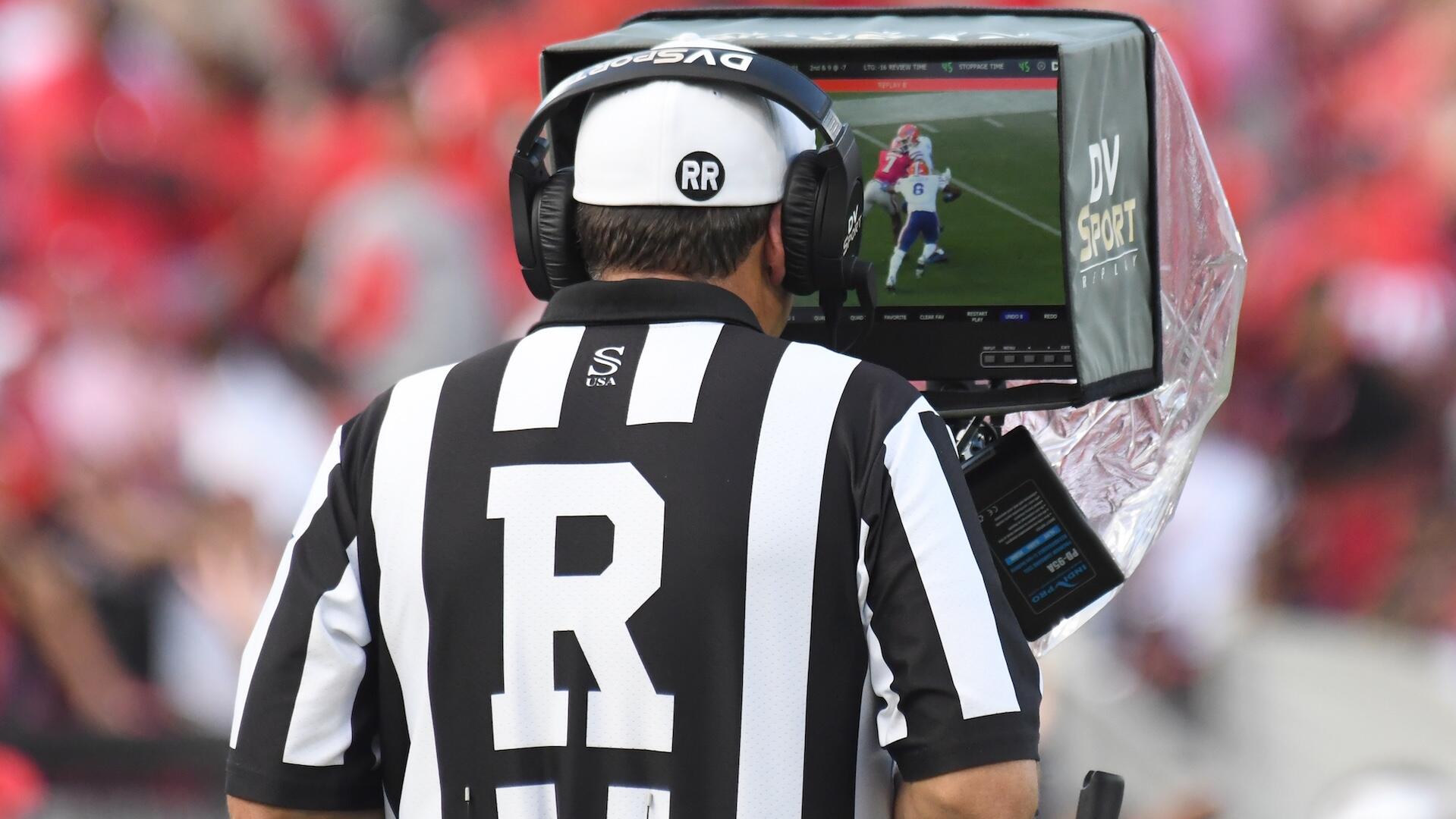
The targeting rule in college football has long been a subject of discontent among coaches, and finally, change is coming to the penalty structure.
The Division I FBS Oversight Committee approved a one-year trial rule on Thursday that fundamentally reshapes targeting penalties. Now, first-time offenders will be allowed to participate in the next game, regardless of which half the foul occurs. Previously, players charged with targeting in the second half were booted from the game and suspended for the first half of the next game.
A player disqualified for targeting a second time during a season will be required to miss the first half of the next game. A third targeting penalty triggers a full-game suspension. No player in the FBS was charged with three targeting penalties in 2025.
Conferences will now also have the option to file an appeal for second offenses. The appeal can also include the player’s first targeting foul. If the NCAA’s national coordinator of football officials overturns the targeting foul, the player will not have to sit out the next game.
The baseline, in-game penalties remain. Players charged with targeting will be ejected for the remainder of the contest, and a 15-yard penalty will be assessed to the offending team. The NCAA implemented the targeting foul in 2008, and the ejection penalty was added in 2013. Conference offices have been allowed to appeal disqualification decisions made in the second half of games, further fueling coaches’ campaign against the penalty structure.
The American Football Coaches Association proposed a two-tiered targeting system in 2019, with egregious hits to the head resulting in ejection and less-serious infractions drawing only a 15-yard penalty. The proposal never gained…
..
[ad_2]